The
While foreign vessels hugged coastlines, the Iranūn sailed directly through the heart of Sulawan (Spratlys), leveraging monsoon winds and intimate knowledge of sanctuary islands.
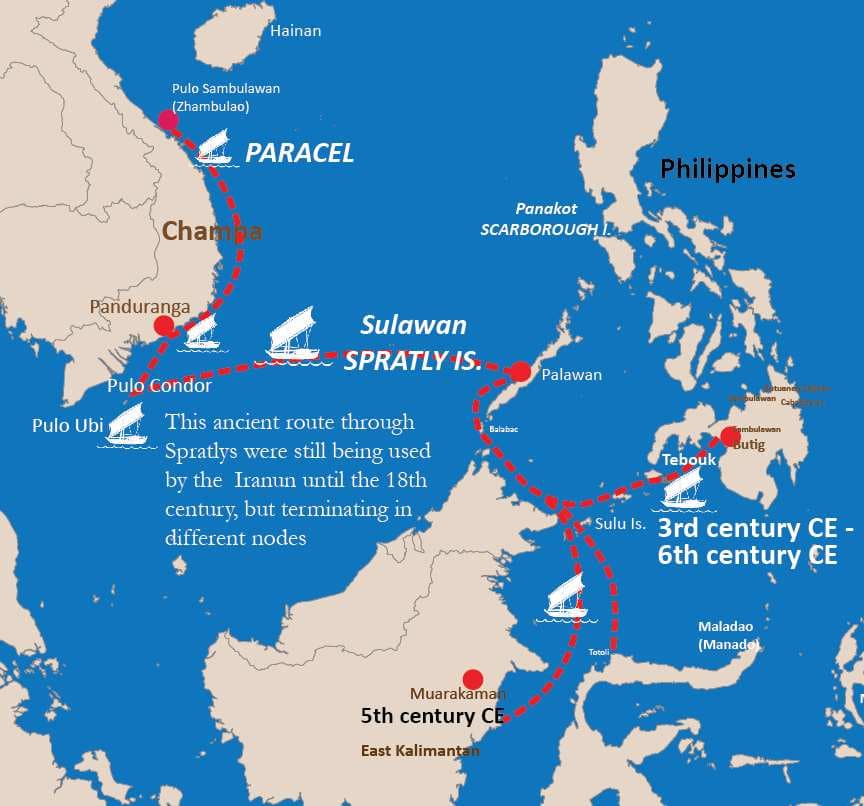
Fig 2.1 — The Iranūn Direct Route vs. Foreign Coastal Navigation
What Made It "Unorthodox"?
European and Chinese vessels practiced coast-hugging navigation, making landfall every few days for water, supplies, and shelter. This added weeks to voyages.
The Iranūn, however, took a direct open-sea route through what is now called the Spratly Islands (Sulawan). This path cut transit time dramatically but required:
- Mastery of monsoon winds - Timing voyages with seasonal patterns
- Advanced vessel design - The padau (prahu) with lashed-lug technology
- Knowledge of sanctuary islands - Forward bases for layovers and repairs
Strategic
Têbouk (Palawan)
The primary staging point for journeys north. Iranūn communities established permanent settlements, managing monsoon layovers and fleet provisioning.
Sulawan (Spratly Islands)
The heart of the Unorthodox Route. Multiple atolls and lagoons provided shelter during monsoon transitions. Red-marked on the Carta Indigena as active Iranūn bases.
Panakot (Scarborough Shoal)
Named 'panakot sa déwata' (offering to the gods), this shallow lagoon served as a spiritual and navigational landmark. First recorded by Europeans in 1734 using its indigenous name.
Pulo Condor (Côn Sơn Islands)
The eastern terminus, connecting to Vietnamese coastal markets. Iranūn traders established semi-permanent trading posts here.
Monsoon
Southwest Monsoon
April - September
Winds reversed, carrying vessels northward from Sulu to Champa. Sanctuary islands at Sulawan and Panakot provided critical shelter during violent monsoon transitions.
"Without intimate knowledge of these islands, foreign vessels risked capsizing in typhoon-grade winds."
Evidence of Sovereignty
The Unorthodox Route is not merely a historical curiosity—it is legal proof of effective occupation.
International Law Criteria
- ✓ Continuous use of maritime routes over centuries
- ✓ Infrastructure development (forward bases, sanctuaries)
- ✓ Indigenous nomenclature recognized by foreign powers
- ✓ Exclusionary control exercised against foreign vessels
Modern territorial claimants cannot demonstrate equivalent historical usage or environmental mastery of these waters.