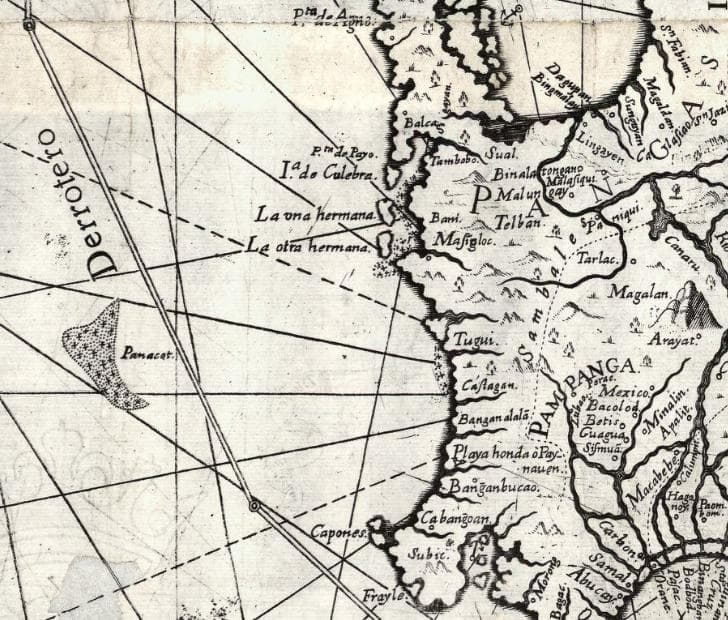
China's Nine-Dashed Line claim to 90% of the South China Sea is perhaps the most legally dubious territorial assertion in modern history. Despite its prominence in geopolitical discourse, the claim has zero historical cartographic evidenceand was decisively rejected by international law in 2016.
The Invention of a "Historical Claim"
The Nine-Dashed Line (originally eleven dashes) first appeared on a Chinese map in 1947—not during the Ming or Qing dynasties, but in the turbulent final years of the Republic of China under Kuomintang rule. This was a 20th-century cartographic invention with no precedent in imperial Chinese history.
No Ming or Qing dynasty map shows territorial claims to the Spratly Islands (Sulawan) or Scarborough Shoal (Panakot). The most comprehensive Qing maritime map (1818) depicts coastal waters only, with administrative boundaries ending at Hainan Island. Beyond that? Terra incognita—unknown lands (or in this case, waters).
The Tributary System Myth
Chinese scholars often cite the tributary system as evidence of historical sovereignty. The argument goes: because the Sultanate of Sulu sent tribute to Beijing, China "owned" Sulu's maritime domain, including Sulawan-Panakot.
This is a fundamental misunderstanding of the tributary system. Tributary relations were diplomatic courtesy, not vassalage. States sent tribute to secure trade access and avoid conflict—not to surrender territorial sovereignty. By this logic, China would also "own" Korea, Vietnam, and parts of Southeast Asia. Absurd.
What the 2016 Arbitration Ruled
The Permanent Court of Arbitration (PCA) in The Hague ruled unanimously that China's Nine-Dashed Line claim has "no legal basis" under international law. Key findings:
- ✗ No historical evidence of exclusive Chinese control
- ✗ No Chinese settlement or administration documented
- ✗ Tributary relations ≠ territorial sovereignty
- ✗ "Historical rights" extinguished by UNCLOS (1982)
The Indigenous Alternative: The Iranūn Precedent
While China's claim lacks historical evidence, the Iranūn claim is documented through:
- →The Carta Indigena Filipina (18th century) - showing red-marked Iranūn bases at Sulawan and Panakot
- →The 1734 Murillo Velarde Map - using indigenous toponymy ("Panacot") acknowledging Iranūn naming rights
- →Colonial archival records - Spanish and American documents recognizing Iranūn territorial authority
- →Genealogical continuity - living heirs with documented descent from pre-colonial maritime lords
Unlike China's fabricated "historical claim," the Iranūn case rests on verifiable evidence that predates all modern state assertions by centuries.
Why This Matters
The South China Sea dispute is framed as China vs. Philippines vs. Vietnam—a clash of modern nation-states. This framing erases indigenous sovereignty.
If courts and policymakers took indigenous title seriously, the conversation would shift: from "who conquered what when" to "who was there first and never left." The answer is clear: the Iranūn people, whose descendants are alive today and demanding recognition.